


Anjali Sharma’s New Song SAJNA Takes The Internet By Storm Goes Viral Overnight
 Posted by admin on Jun 12th, 2023 | Comments Off on Anjali Sharma’s New Song SAJNA Takes The Internet By Storm Goes Viral Overnight
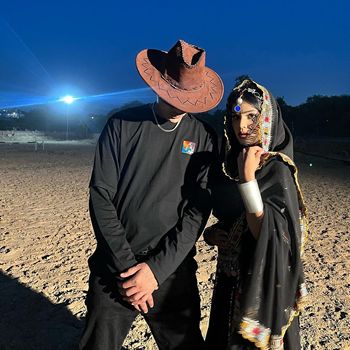
In a remarkable turn of events, a newly released song by artist AB Rockstar featuring Bollywood actress Anjali Sharma has taken the music world by storm, quickly becoming a viral sensation. The catchy tune, which showcases the diva’s quick moves, has captured the hearts of listeners across the globe.
Within hours of its release, the song began spreading like wildfire on social media platforms, captivating listeners with its infectious melodies and thought-provoking lyrics. Fans and music enthusiasts alike were instantly drawn to the artist’s distinctive sound, creating a buzz that quickly transformed into a viral phenomenon.
The song’s popularity has skyrocketed, amassing amazing views, shares, and downloads across various streaming platforms. Listeners have flooded comment sections, expressing their admiration for the artist’s exceptional musical abilities and praising the song’s relatability and emotional depth.
Anjali Sharma, whose rise to prominence has been meteoric, has undoubtedly solidified her position as an artist to be reckoned with in the showbiz. Her unique style, combined with their ability to connect with audiences on a profound level, has garnered widespread acclaim and attention from both fans and industry professionals.
Music insiders predict that the viral success of this latest release will open doors for Anjali and present numerous opportunities for collaboration, live performances, and even potential record deals. Industry executives have taken note of her remarkable talent and are eagerly watching as the song continues to climb charts and gain international recognition.
As the song continues to go viral, it’s clear that Anjali Sharma has cemented their place among the industry’s brightest stars. Fans and industry professionals eagerly await the artist’s next move, eager to see how they will build upon this incredible success and further leave their mark on the music world.
https://www.instagram.com/p/CtWT9EjK2di/


Anjali Sharma’s New Song SAJNA Takes The Internet By Storm Goes Viral Overnight
Basu Chatterjee – Remembering Bollywood’s God of Small Things
Posted by admin on Jun 12th, 2023 | Comments Off on Basu Chatterjee – Remembering Bollywood’s God of Small Things 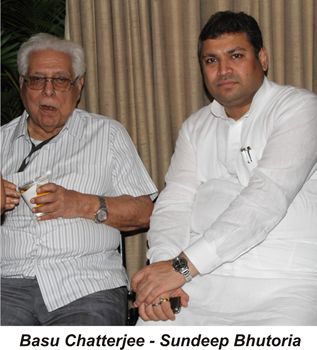
———-Sundeep Bhutoria
By the end of the 1960s, Hindi cinema was poised for a change. The decade had largely been about escapist cinema, and though some of these had great songs, there was little that was creative and path-breaking by way of content. The odd exceptions – Bandini, Sahib Bibi Aur Ghulam, Anupama and Teesri Kasam – only proved the rule about a decade that replaced the artistic aspirations of the 1950s with what has in effect come to define ‘Bollywood song-and-dance’ cinema.
The advent of the Film and Television Institute of India (FTII) in 1962 played an important part in this change, with its first batches beginning to enter the industry, bringing in a change in aesthetics. The year 1969 was to be a watershed in the history of Hindi cinema, with three films that proved instrumental in ushering in a new language, heralding the New Wave in Hindi cinema: Mrinal Sen’s Bhuvan Shome, Mani Kaul’s Uski Roti and Basu Chatterjee’s Sara Akash (all three were shot by K.K. Mahajan, who had graduated from the FTII in 1966, and who became synonymous with the New Wave and with the cinema of Basu Chatterjee).
Of these three film-makers, Mrinal Sen remained rooted largely to Bengali films and Mani Kaul carved a space for a personal cinema free of commercial considerations. It was Basu Chatterjee who, in conjunction with the films of Hrishikesh Mukherjee and Gulzar, provided an alternative to the big-budget extravaganza of mainstream films of the era (the Manmohan Desais and Prakash Mehras) and the spare aesthetics of arthouse cinema (driven by Shyam Benegal).
The importance of Basu Chatterjee lies in the kind of cinema he popularised when juxtaposed against the cinema that ruled the box office at the time. The 1970s was the decade of the big blockbuster – Yaadon Ki Baaraat, Deewaar, Sholay, Amar Akbar Anthony. Yash Chopra and Ramesh Sippy, Nasir Hussain and Shakti Samanta were the dream merchants. Amitabh Bachchan and Dharmendra, Rishi Kapoor and Rajesh Khanna were the role models for the filmy hero, while Zeenat Aman and Hema Malini set a million young hearts aflutter. The aesthetic of Hindi cinema was larger-than-life.
They were not heroes and heroines, but the man and woman next door
Basu Chatterjee provided an alternative. His debut, Sara Akash, belonged firmly to the New Wave school of spare film-making. He however jettisoned this soon, opting for a middle road between this and the big-budget extravaganza. In doing so he made ‘small’ beautiful and commercially viable. With Rajnigandha (1974), he revolutionised Hindi cinema, casting rank newcomers in a literary classic by Mannu Bhandari. The film, unlike any other film of the time (a runtime of approximately two hours, no lip-synched songs, no fights, no flashy clothes and make-up for its actors who looked nothing like Greek gods) broke all records at the box office. He had already shown a penchant for a different approach to the cinema of the city in Piya Ka Ghar (1971), dealing with a couple finding their way to love and domesticity in the confined spaces of a one-room tenement in Mumbai shared by the extended family. While the latter starred Jaya Bhaduri (in one of her early roles) and Anil Dhawan (fresh from the FTII), Rajnigandha made stars of the unlikely duo of Amol Palekar and Vidya Sinha.
Over the next few films, Basu Chatterjee made his school of cinema an audience favourite. Chhoti Si Baat and Chitchor, both 1976, starred Amol Palekar, who soon came to be termed ‘the Amitabh Bachchan of middle-of-the-road cinema’. In Vidya Sinha, the director gave Hindi cinema the very antithesis of the ’70s heroine. His characters epitomised the Everyman. They were not heroes and heroines, but the man and woman next door. The men were not macho style icons. They were often gentle, hesitant and even lacking in ambition. The women were down to earth and real, not coy and simpering. And their world consisted of humble middle-class drawing rooms, local bus stops and trains, and office corners. Even when he cast superstars like Amitabh Bachchan (Manzil, inspired by Mrinal Sen’s Akash Kusum) and Dharmendra (Dillagi, with Hema Malini), the stars willingly shed their starry mannerisms to play everyday characters.
His spotlight was on literary classics, communities and women
No one brought alive particular communities as lovingly as he did in his films like Khatta Meetha (the Parsis) and Baaton Baaton Mein (the Christians in Mumbai). And few film-makers of the time were as adept at adapting literary classics as he was – Sara Akash (from a novel by Rajendra Yadav), Piya Ka Ghar (Vasant Kale, or Va Pu), Rajnigandha (based on a short story by Mannu Bhandari), Ratnadeep (Prabhat Mukhopadhyay), Swami and Apne Paraye (based on novels by Saratchandra Chattopadhyay) – giving his cinema a unique literary sensibility.
One of the most revolutionary aspects of his cinema lay in the woman his films portrayed. Right from Malti in Piya Ka Ghar, they were independent women with a mind of their own. They were determined, focused and unwilling to bow down to convention just because society demanded it. Vidya Sinha’s Deepa in Rajnigandha is revolutionary in the way she is shown as unable to make up her mind about the two men she is dating. Zarina Wahab’s Geeta in Chitchor decides to follow her heart in the face of family opposition. In Swami, the woman reads Thomas Hardy and is torn between the man she thinks is her intellectual equal and her ‘simple’ husband. These women challenged the existing tropes on the portrayal of women in Hindi cinema.
Wah, what songs! ‘Yeh jeevan hai’ to ‘Kai baar yunhi dekha hai’ to ‘Rimjhim gire sawan’
This ability to carve out a different cinema was visible in the songs in his films as well. From ‘Yeh jeevan hai’ in Piya Ka Ghar to ‘Rajnigandha phool tumhare’ in Rajnigandha (‘Kai baar yunhi dekha hai’ from the same film won a National Award) to the evergreen songs of Chitchor to ‘Rimjhim gire sawan’ (arguably the finest rain song in Hindi cinema) in Manzil, the cinema of Basu Chatterjee provided Hindi cinema with some of its most loved and enduring classics.
The dream of 1969 was to prove short-lived. By the end of the 1970s, the cinema of the Basu Chatterjee-Hrishikesh Mukherjee-Gulzar School was shutting shop. Driven by a changing demographic, the onslaught of video piracy, some indifferent films by the film-makers themselves, and the advent of TV as a popular medium, kitschy commercial films were making a comeback in a big way and the next decade would witness a new low for Hindi films.
Basu Chatterjee, of course, led the first wave of top-notch and popular content in television with serials like Rajani, Byomkesh Bakshi, Darpan and Kakaji Kahin proving to be trailblazers. His legacy lives on in the cinema of every filmmaker who explores the life and world of the Everyman.
Basu Chatterjee – Remembering Bollywood’s God of Small Things
MLA Dr Bharati Tai Lavekar Inaugurated KAK’S SALON
Posted by admin on Jun 10th, 2023 | Comments Off on MLA Dr Bharati Tai Lavekar Inaugurated KAK’S SALON 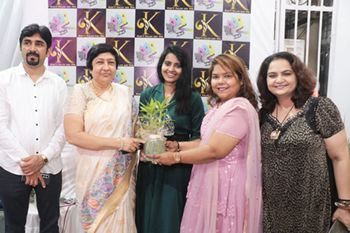
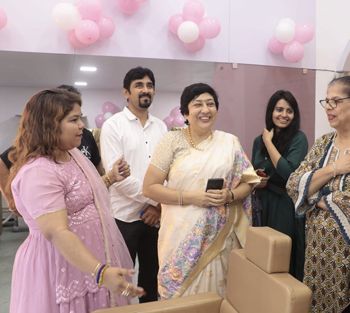
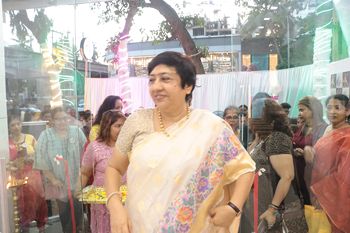
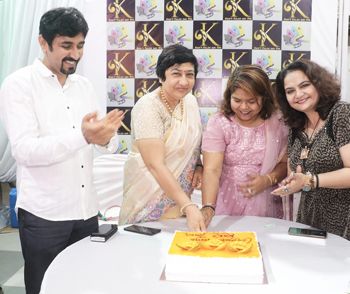
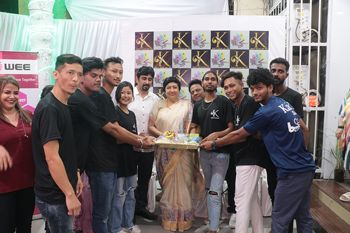
WEE-Mumbai Member Kakoli Meghani, owner of “Kak’s Salon” – a premium beauty and Spa opened her another branch at Four Bunglows Signal , Andheri West in presence of the Chief Guest MLA Dr. Bharati Tai Lavekar, Guest of Honors Shri Yogiraj Dabhadkar (Corporator Ward 60) and Chaitali Chatterjee (Chairperson of WEE – Women Entrepreneurs Enclave and Founder of ShrOM Communications and Solutions)
Other WEE members who attended the event were Jane Rodrigues, Neena Shetty, Rekha Kalra, Sangeeta Mishra, Anvitaa Malhotra, Preeti Alok Sharma, Bindu Masurkar, Rahila Hasan Gazi, Harmeet Kaur, Debjani Salvi, Vanee Jaisingh, Rajkunwar Rane, Silky Kapoor, Aparajita Bir and Sapna Upadhyay
Contact us for appointment:
+91 98212 45565
https://instagram.com/kaks_salon?igshid=NTc4MTIwNjQ2YQ==
https://fb.watch/kT0diCFpwD/?mibextid=RUbZ1f
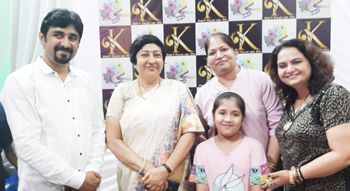
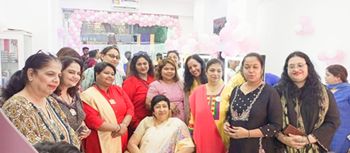
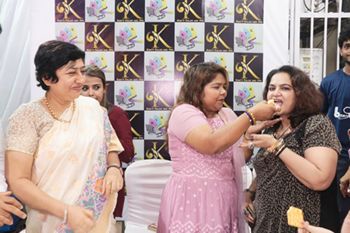

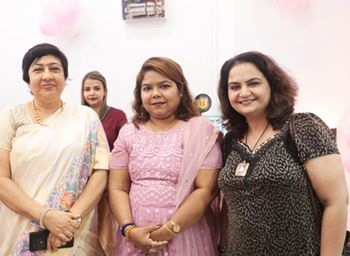

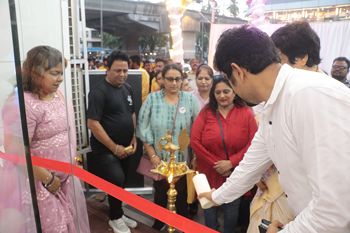
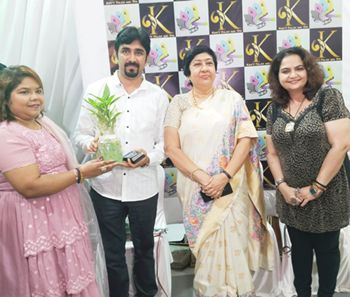
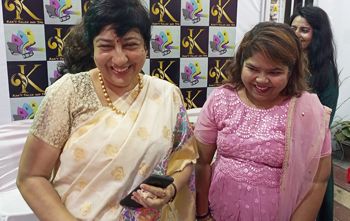
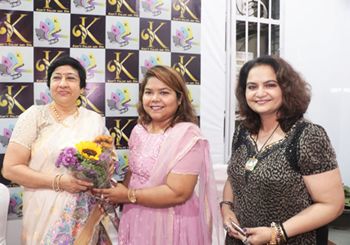

MLA Dr Bharati Tai Lavekar Inaugurated KAK’S SALON
World Environment Day With Romanian Experience At MARWAH STUDIOS
Posted by admin on Jun 10th, 2023 | Comments Off on World Environment Day With Romanian Experience At MARWAH STUDIOS 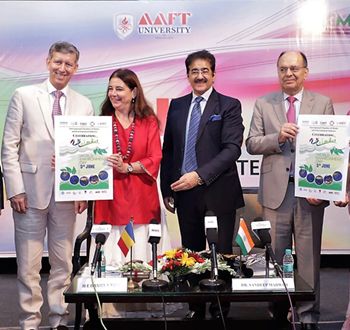
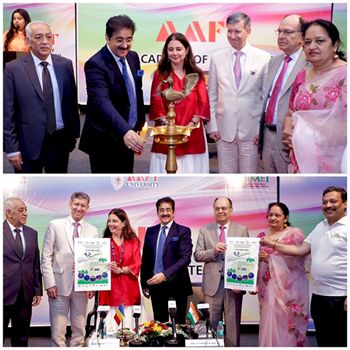
Noida – The World Environment Day had a good go when The Indo-Romania Film and Cultural Forum, in association with the International Chamber of Media and Entertainment Industry and the Embassy of Romania, celebrated it (World Environment Day) with a special screening of the powerful documentary “Untamed Romania” at Marwah Studios.
The film, which captivated the audience, was inaugurated by H.E. Daniel Tane, Ambassador of Romania to India, and Sandeep Marwah, President of Marwah Studios, along with distinguished guests including H.E. Javier Paulnich, Ambassador of Peru to India, H.E. Teodoro Maldonodo, Ambassador of Ecuador to India, and Lt. Gen Anil Malik (Retd).
“Well, “Untamed Romania” is an extraordinary cinematic creation that showcases the breathtaking beauty and diverse wildlife of Romania. The filmmaker’s dedication is evident, as over 400 hours of footage were expertly crafted into a brilliant 90-minute documentary, offering a glimpse into the untamed world hidden beyond the bustling cities of Romania. From majestic mountains to ancient forests and expansive wetlands, this film transports viewers to undisturbed habitats where iconic creatures thrive,” said Sandeep Marwah with pride.
Following the screening, a thought-provoking discussion on environmental issues was held, featuring prominent environmentalist Ajit Kumar and Ranju Minhas. Their insights shed light on crucial aspects of preserving and safeguarding our environment.
The impact of “Untamed Romania” was not limited to the audience alone; it also left a lasting impression on the attending filmmakers. In recognition of its excellence, the International Film and Television Club of the Asian Academy of Film and Television is pleased to present the prestigious Award of Distinction to “Untamed Romania,” announced by Dr Sandeep Marwah.
This World Environment Day event served as a testament to the power of cinema in raising awareness about the natural wonders of our planet and the urgent need to protect them. “Untamed Romania” stands as a shining example of the harmonious coexistence between humans and nature, reminding us of our responsibility to preserve the earth for future generations.
It’s green all the way!
World Environment Day With Romanian Experience At MARWAH STUDIOS
UNSEEN THOUGHTS Art Exhibition By 8 Contemporary Artists In Jehangir Art Gallery
Posted by admin on Jun 8th, 2023 | Comments Off on UNSEEN THOUGHTS Art Exhibition By 8 Contemporary Artists In Jehangir Art Gallery 
From: 6th to 12th June 2023
“Unseen Thoughts”
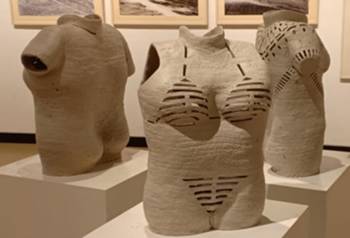
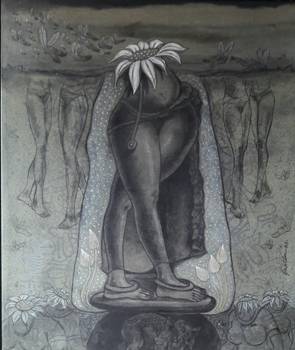
An exhibition of paintings, Graphics, Sculpture, Ceramics and Drawings By Contemporary artists – Abdul Salam, Anju Paliwal, Dasarath Das, Dibakar Chandra, Gautam Das, Shrihari Dutta, Rakesh Sadhak , Ishaan Kewalramani .
VENUE:
Jehangir Art Gallery
161-B, M.G. Road,
Kala Ghoda, Mumbai 400 001
Timing: 11am to 7pm
Contact: +91 98312 59428, 98300 37608
Recent works of a group of 8 eclectic contemporary artists from Bengal and Lucknow have been displayed in a group art exhibition at Jehangir Art Gallery, M.G Road, Kala Ghoda, Mumbai 400001 from 6th to 12th June 2023 between 11 am and 7 pm. It will showcase the unseen thoughts and art practices of 8 contemporary talented artists under one roof in an array of styles and artistic approach towards the medium technique adopted by the participating artists for the aesthetic and artistic adornment of vivid art works with the expected visual perspective and glorious effects of reality and ecstasy in the apt arenas.
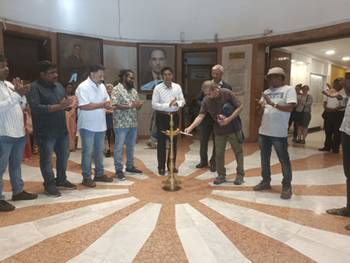
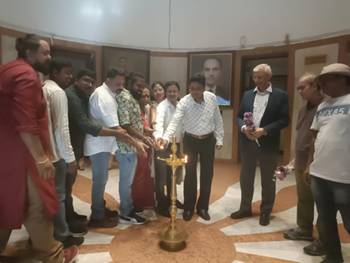
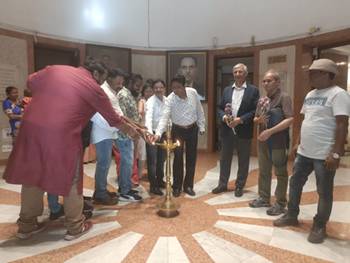
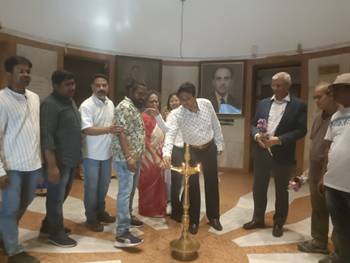
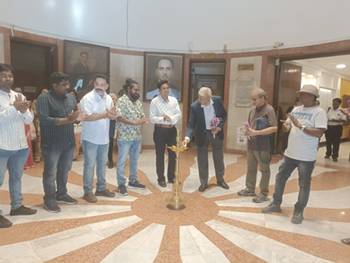
This exhibition was inaugurated on 6th June 2023 by Mr. Kumar Desai, Advocate Highcourt Mumbai in the presence of Mr. Vilas Shinde, Eminent Artist and many other art lovers, collectors, patrons/ connoisseurs along with other art enthusiasts in the present art world.
The participating artists in this group art exhibition are:-
Abdul Salam, Anju Paliwal, Dasarath Das, Dibakar Chandra, Gautam Das, Shrihari Dutta, Rakesh Sadhak , Ishaan Kewalramani .







UNSEEN THOUGHTS Art Exhibition By 8 Contemporary Artists In Jehangir Art Gallery


